
Top Flood-Safe Neighborhoods and Homes in South Carolina

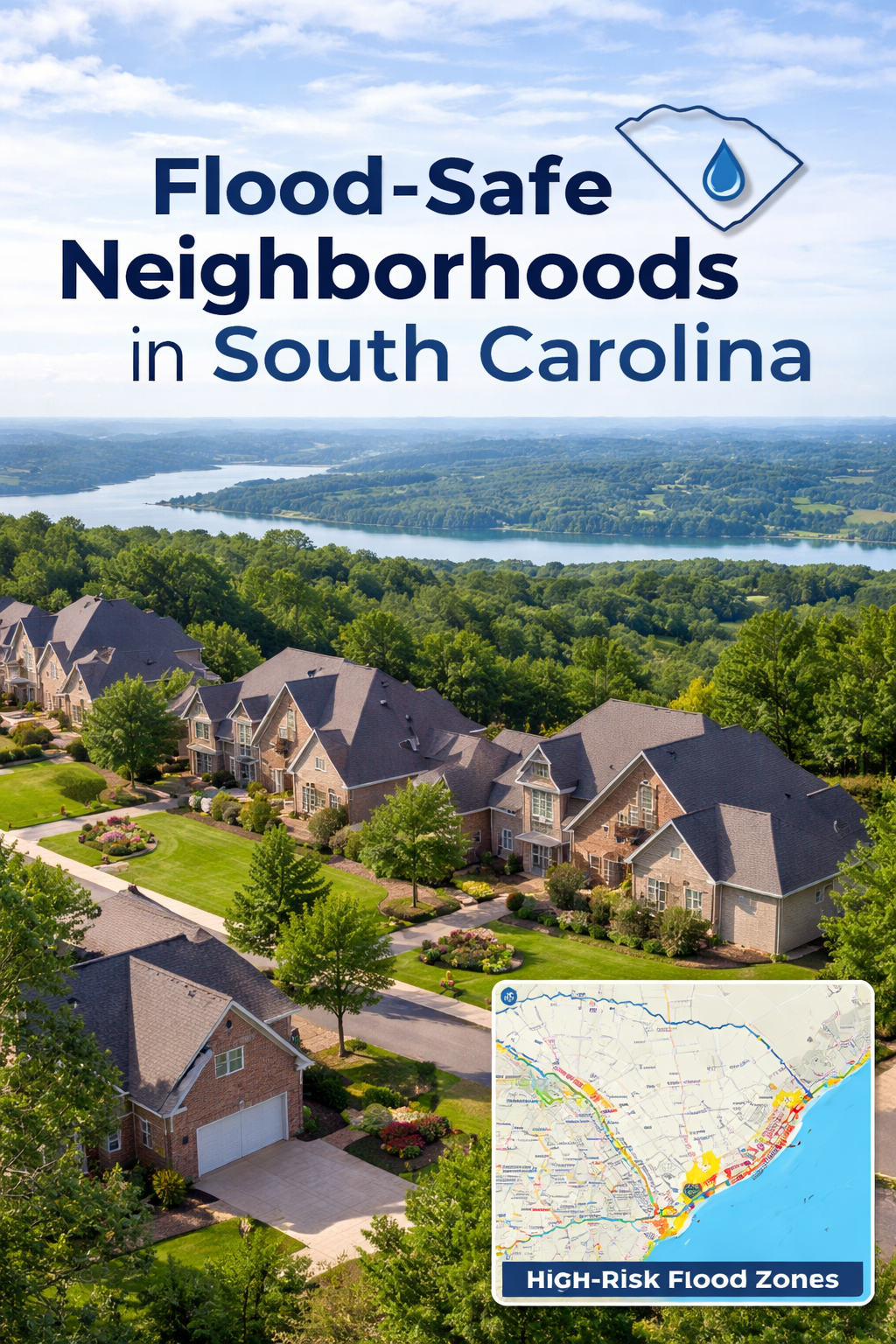
Buying a home in South Carolina requires more than just finding the right layout or neighborhood. Flood risk plays a major role in long-term property value, insurance costs, and overall peace of mind. With more than 210,000 residents living in flood prone areas across the state, understanding where and how flooding occurs is essential before making a purchase. The goal is not to avoid SC altogether, but to make informed decisions that protect your investment.
Understanding Flood Zones in SC
Flood zones in SC are established by FEMA through Flood Insurance Rate Maps, which categorize areas based on their level of flood risk. High risk zones such as AE and VE typically indicate 1% annual chance of flooding and are often located near coastlines, rivers, and low lying areas. These zones usually require mandatory flood insurance if you are financing the home. Moderate to low risk zones, often labeled as Zone X, may not require insurance but still carry some level of exposure. It is important to understand that flood zones are not static. They can change due to new development, updated data, and shifting environmental conditions. Reviewing FEMA flood maps early in your home search allows you to assess risk accurately and avoid costly surprises later.
Inland vs Coastal Housing Risk
Location is one of the most significant factors in determining flood risk. Coastal areas such as Charleston, Myrtle Beach, and Beaufort are more vulnerable to storm surge, hurricanes, and tidal flooding, placing many properties in higher risk flood zones. These areas often come with higher insurance premiums and stricter building requirements. Inland markets like Columbia, Lexington, and Greenville are generally less exposed to coastal flooding, but they are not completely risk-free. Heavy rainfall, overflowing rivers, and poor drainage can still create localized flooding issues. Buyers should also pay close attention to elevation. Homes situated on higher ground or outside of designated floodplains tend to offer greater protection, more stable insurance costs, and stronger long-term value.
Flood Insurance for SC Homebuyers
A common misconception among buyers is that standard homeowners insurance covers flood damage. In reality, it does not. Flooding caused by rising water, storm surge, or overflowing waterways requires a separate flood insurance policy, typically through the National Flood Insurance Program or private insurers. Even if a property is located outside of a high risk zone, flood insurance should still be considered. A significant percentage of flood claims come from moderate to low risk areas, often catching homeowners off guard. The financial impact can be substantial, with even minimal flooding causing tens of thousands of dollars in damage. Evaluating insurance options early in the buying process helps you understand the true cost of ownership and avoid unexpected expenses.
The 2023 SC Flood Disclosure Law
In 2023, South Carolina implemented stronger flood disclosure requirements to improve transparency in real estate transactions. Sellers are now required to provide more detailed information regarding a property’s flood history and risk. This includes disclosing past flood damage, previous insurance claims, whether the home is located in a designated flood zone, and any known flooding issues or repairs related to water intrusion. This law represents a significant shift toward protecting buyers, as it reduces the likelihood of hidden risks. However, disclosures should not replace due diligence. Buyers should still independently verify flood zone status, review property history, and ask detailed questions before proceeding with a purchase.
Identifying Flood Safe Neighborhoods and Homes
Finding a flood safe property involves a combination of research, strategy, and local expertise. Reviewing FEMA flood maps is a critical first step, as it provides a clear picture of a property’s risk level. Beyond mapping, elevation plays a key role, with higher ground properties generally offering better protection. Buyers should also evaluate proximity to water sources such as rivers, creeks, and drainage systems, as these can influence flood potential even outside high risk zones. Inland neighborhoods often provide a more balanced combination of safety and affordability, but each property should still be evaluated individually. Working with a knowledgeable real estate professional who understands local flood patterns can help you identify safer areas, interpret disclosures, and make a well informed decision.
Final Thoughts
Flood risk is a reality in SC, but it does not have to be a dealbreaker. The key is understanding where the risks exist, how they impact a property, and what steps you can take to minimize exposure. By carefully reviewing flood zones, considering elevation, evaluating insurance needs, and leveraging updated disclosure laws, you can confidently navigate the market and choose a home that aligns with both your lifestyle and long term financial goals.
Ready to Find a Safer Home in SC
If you are planning to buy and want expert guidance on identifying flood safe neighborhoods, understanding flood zones, and evaluating the true risk of a property, I am here to help. Reach out today and let’s discuss your goals so you can make a confident and informed move.
Categories
Recent Posts










"Molly's job is to find and attract mastery-based agents to the office, protect the culture, and make sure everyone is happy! "