South Carolina Property Management Tips

Start With the Right Tenants
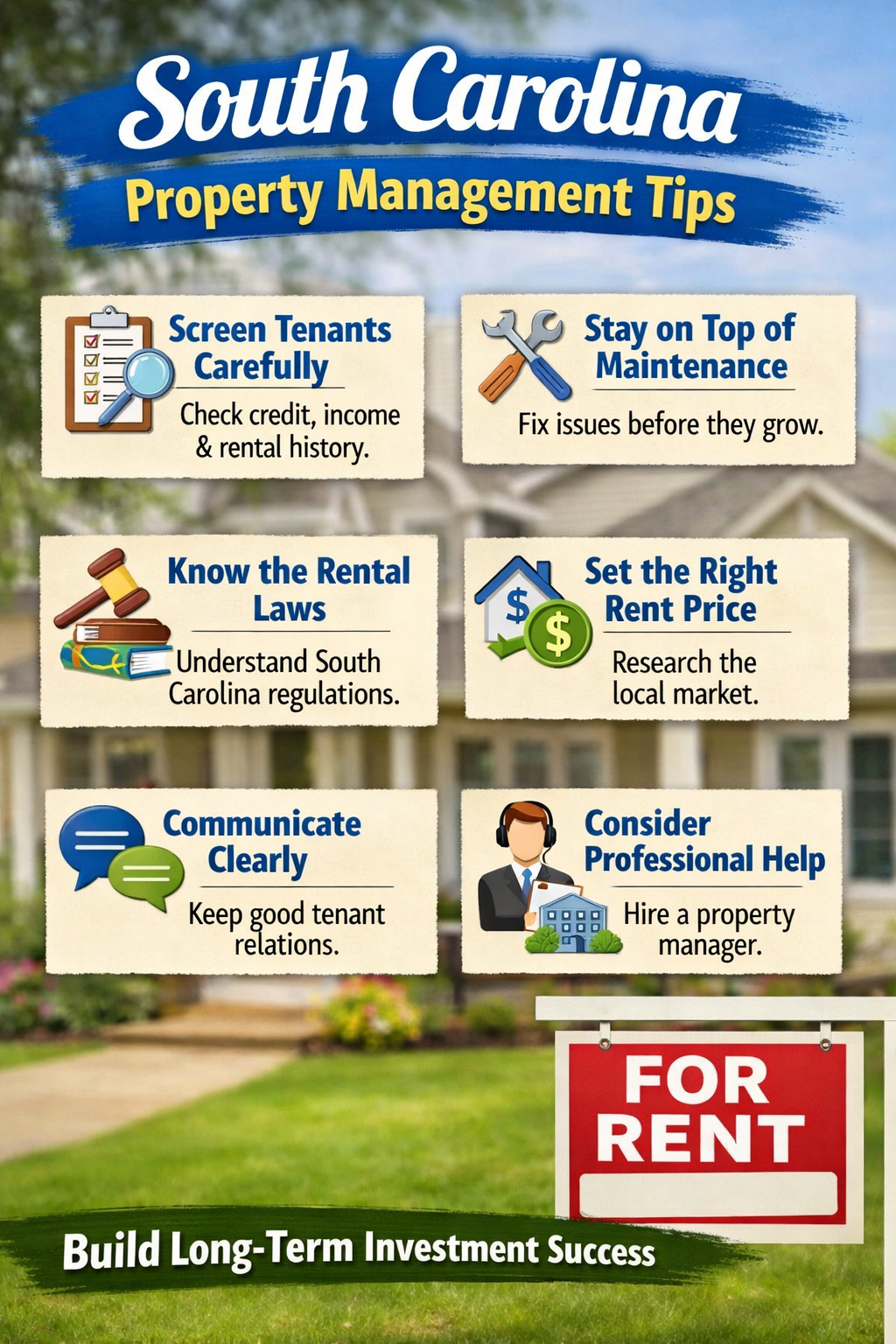
Successful property management begins with selecting reliable tenants. Screening applicants thoroughly by checking credit, verifying income, and reviewing rental history helps reduce risks and protect your investment over the long term. A good tenant pays on time, respects the property, and communicates effectively. On the other hand, a poorly screened tenant can lead to late payments, property damage, and costly legal issues. It is also important to create a consistent screening process for every applicant. This ensures fairness and helps you make decisions based on facts rather than assumptions. Many landlords in South Carolina use standardized criteria such as minimum income requirements and rental history checks to maintain consistency.
Keep Up With Regular Maintenance
Regular maintenance is essential for protecting your investment. Addressing small issues early can prevent expensive repairs later and extend the life of your property. Simple tasks such as HVAC servicing, plumbing checks, and roof inspections can save thousands in future repairs. Preventive maintenance also keeps tenants satisfied, which increases the likelihood of lease renewals. Well maintained properties not only retain value but also attract better tenants. When a home is clean, functional, and well cared for, renters are more likely to treat it with respect and stay longer.
Understand South Carolina Rental Laws
Landlords must stay informed about rental laws in SC. This includes lease agreements, security deposit rules, eviction procedures, and tenant rights. Understanding these laws helps you avoid legal disputes and ensures smoother property operations. For example, having a properly written lease agreement can protect both the landlord and tenant by clearly outlining responsibilities. Eviction processes must also follow legal guidelines. Taking the time to understand the correct procedures can prevent delays and unnecessary costs.
Price Your Rental Strategically
Setting the right rental price is one of the most important factors in property management. If the price is too high, your property may sit vacant. If it is too low, you lose potential income. Researching local market trends in areas like Columbia helps you understand what similar properties are renting for. This allows you to position your property competitively while maximizing returns. It is also important to consider seasonal demand, property condition, and location when setting rent. Small adjustments can make a big difference in occupancy rates and long term profitability.
Screen for Long Term Stability
Beyond basic screening, landlords should look for tenants who offer long term stability. This includes evaluating job history, rental consistency, and overall financial responsibility. Long term tenants reduce turnover costs, vacancy periods, and maintenance wear and tear. Every time a tenant moves out, landlords often face cleaning, repairs, and marketing expenses. Finding tenants who plan to stay longer helps create predictable income and reduces stress for property owners.
Communicate Clearly and Professionally
Good communication is a key part of successful property management. Setting expectations early helps avoid misunderstandings later. Tenants should know how to report maintenance issues, when rent is due, and what rules must be followed. Providing clear communication channels, such as email or a tenant portal, can improve efficiency and satisfaction. Professional communication also helps resolve conflicts quickly and prevents small issues from escalating into larger problems.
Reduce Vacancy Time
One of the biggest challenges in property management is vacancy. Every month a property sits empty represents lost income. To reduce vacancy time, landlords should begin marketing the property before the current lease ends. High quality photos, competitive pricing, and strong listing descriptions can attract tenants faster. Keeping the property in good condition also helps reduce time on the market. Move in ready homes are more appealing and tend to rent faster.
Track Expenses and Income Carefully
Proper financial tracking is essential for successful property management. Keeping records of rent payments, maintenance costs, taxes, and insurance helps you understand your true return on investment. Using simple accounting tools or property management software can make this process easier and more accurate. Organized records also help during tax season and financial planning.
Consider Professional Property Management
For many landlords, hiring a professional property manager is a smart investment. Property managers handle tenant screening, rent collection, maintenance coordination, and legal compliance. This is especially helpful for landlords who own multiple properties or live outside the area. Professional management can reduce stress and improve overall efficiency. While there is a cost involved, many property owners find that the benefits outweigh the fees due to reduced vacancies and better tenant management.
Build Long Term Investment Success
Property management is not just about maintaining a rental. It is about building long term wealth and stability. A well managed property can provide consistent income, appreciation, and financial security over time. In growing markets like SC, strong management practices can make a significant difference in overall investment success.
📩 Need help managing or investing in rental properties? Send me a message and I will guide you through your next steps and help you build a strong rental strategy.
Categories
Recent Posts









"Molly's job is to find and attract mastery-based agents to the office, protect the culture, and make sure everyone is happy! "