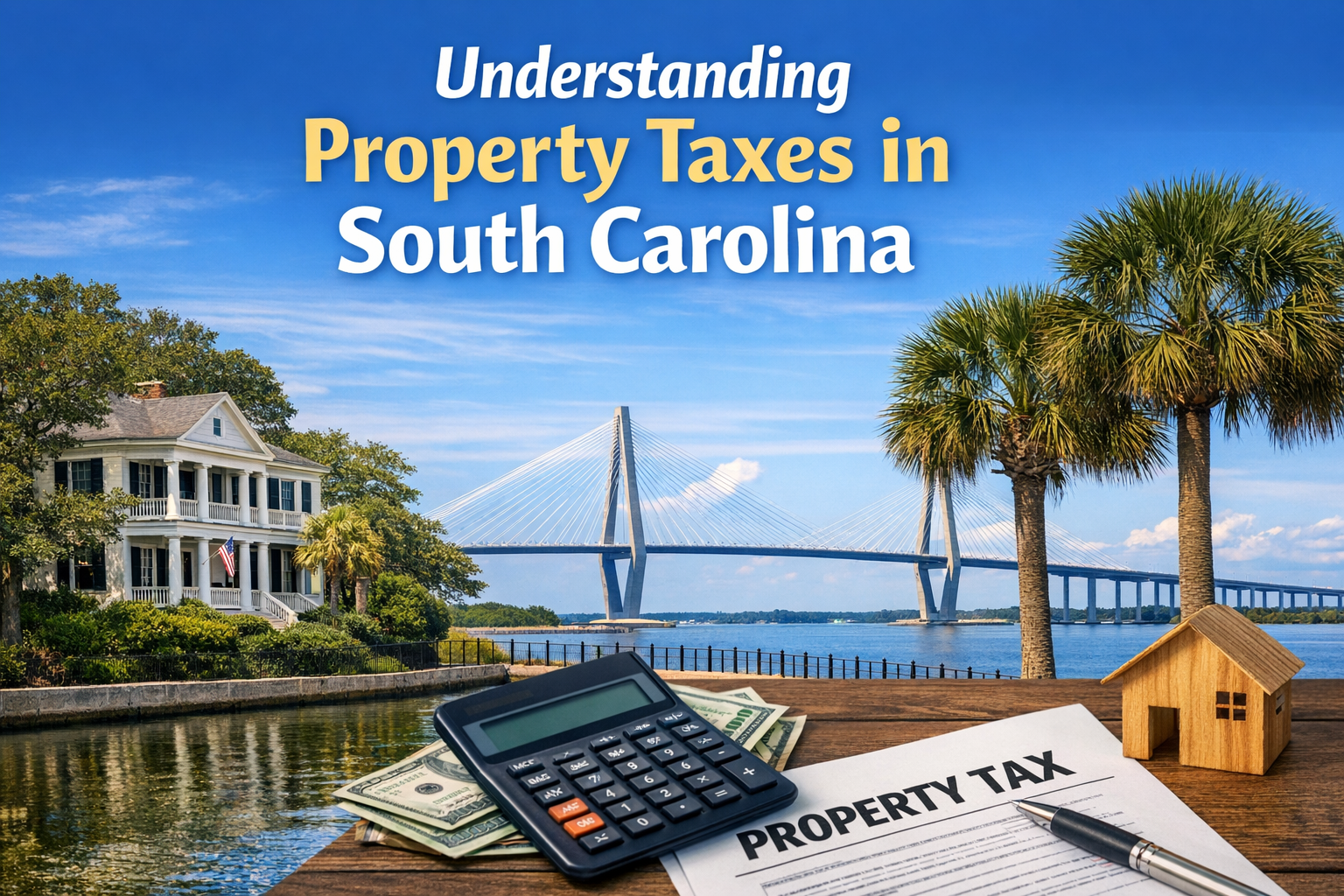
Understanding Property Taxes in South Carolina

Property taxes are one of the most important ongoing costs of owning real estate. Whether you are buying your first home, investing in rental property, or relocating to South Carolina, understanding how property taxes work can help you plan your budget and avoid surprises. In simple terms, property taxes are annual fees paid by property owners to local governments. These taxes fund essential services such as public schools, road maintenance, emergency services, and community development. While they are unavoidable, SC is known for having relatively low property taxes compared to many other states, which is one reason it continues to attract homebuyers and investors. Understanding how these taxes are calculated and what factors influence them will help you make more informed decisions when purchasing property.
How Property Taxes Are Calculated
Property taxes in SC are calculated using three main components which are the assessed value of the property, the assessment ratio, and the local millage rate. The first step is determining the market value of the property. This is typically done by the county assessor and is based on recent sales, property features, and market conditions. However, you are not taxed on the full market value. Instead, SC uses an assessment ratio. For owner occupied primary residences, the assessment ratio is 4%. For investment properties, second homes, and commercial properties, the ratio is higher at 6%. This means your taxable value depends on how the property is used. After the assessed value is calculated, it is multiplied by the local millage rate. A millage rate is the amount of tax per one thousand dollars of assessed value. Each county, city, and school district sets its own millage rate, which means property taxes can vary depending on location.
Example of a Property Tax Calculation
To make this easier to understand, let us look at a simple example. Imagine you purchase a home with a market value of $250K and it is your primary residence. The assessed value at a 4% ratio would be $10K. If the local millage rate is 300 mills, your annual property tax would be around $3K. For an investment property with the same value, the assessed value would be higher because of the 6% ratio. This results in a higher annual tax bill, which is something investors should factor into their return calculations.
The Difference Between Primary and Investment Property Taxes
One of the biggest advantages for homeowners in SC is the lower tax rate for primary residences. This benefit is often referred to as the legal residence classification. If you live in the home as your primary residence, you can apply for this classification through your county. Once approved, your property will be taxed at the lower 4% assessment ratio instead of 6%. This can significantly reduce your annual tax bill. Investment properties, vacation homes, and rental properties do not qualify for this lower rate. This distinction is important for anyone considering real estate investing, especially in high demand areas like the Midlands.
Property Tax Exemptions and Discounts
SC offers several exemptions that can help reduce your property tax burden even further. Homeowners over the age of 65 may qualify for a homestead exemption, which reduces the taxable value of their property. Disabled individuals and certain veterans may also be eligible for additional tax relief programs. These exemptions can make a noticeable difference in long term affordability, so it is worth checking with your local county office to see what you qualify for.
When and How Property Taxes Are Paid
Property taxes in SC are typically billed once a year and are due by January 15. The bill is based on the previous year’s assessment. If you have a mortgage, your lender may collect property taxes as part of your monthly payment through an escrow account. This means you are essentially paying your property taxes in smaller portions throughout the year, which can make budgeting easier. If you do not have an escrow account, you will need to pay the full amount directly to the county tax office before the deadline to avoid penalties.
Why Property Taxes Vary by Location
Even within the same state, property taxes can vary widely depending on where the property is located. This is because millage rates are set by local governments based on their budget needs. For example, areas with higher demand, growing populations, or more developed infrastructure may have different tax rates compared to rural areas. In the Midlands region, property taxes can differ between counties like Richland and Lexington, even if home values are similar. This is why it is important to look beyond the purchase price of a home and consider the long term cost of ownership, including property taxes.
How Property Taxes Affect Homebuyers and Investors
For homebuyers, property taxes play a key role in determining your monthly housing cost. Even if you qualify for a certain loan amount, higher property taxes can impact your affordability. For investors, property taxes directly affect cash flow and return on investment. A property with lower taxes may offer better long term profitability, even if the purchase price is slightly higher. Understanding the tax structure can help you compare properties more accurately and choose the one that aligns with your financial goals.
Tips for Managing Property Taxes
There are a few practical ways to manage and potentially reduce your property tax burden. First, make sure your property is correctly classified as a primary residence if it qualifies. This alone can save you a significant amount each year. Second, review your property assessment. If you believe your home has been overvalued, you have the right to appeal the assessment through your county. Third, explore available exemptions and apply for any that you qualify for. Many homeowners miss out on savings simply because they are unaware of these programs. Finally, plan ahead. Whether you are buying a home or investing in real estate, always include property taxes in your financial calculations.
Final Thoughts on Property Taxes in South Carolina
Property taxes may not be the most exciting part of real estate, but they are one of the most important. The good news is that SC offers relatively low property taxes, especially for primary homeowners, making it an attractive place to buy and invest.
By understanding how taxes are calculated, what affects them, and how to manage them, you can make smarter decisions and avoid unexpected costs. Whether you are buying your first home or expanding your investment portfolio, being informed puts you in a stronger position.
Ready to Make Your Move
If you are planning to buy a home or invest in property in SC and want guidance every step of the way, we are here to help. Contact us today to get personalized advice, understand your true costs, and find the right property for your goals. Your next move starts with the right information, and we are ready when you are.
Categories
Recent Posts




"Molly's job is to find and attract mastery-based agents to the office, protect the culture, and make sure everyone is happy! "