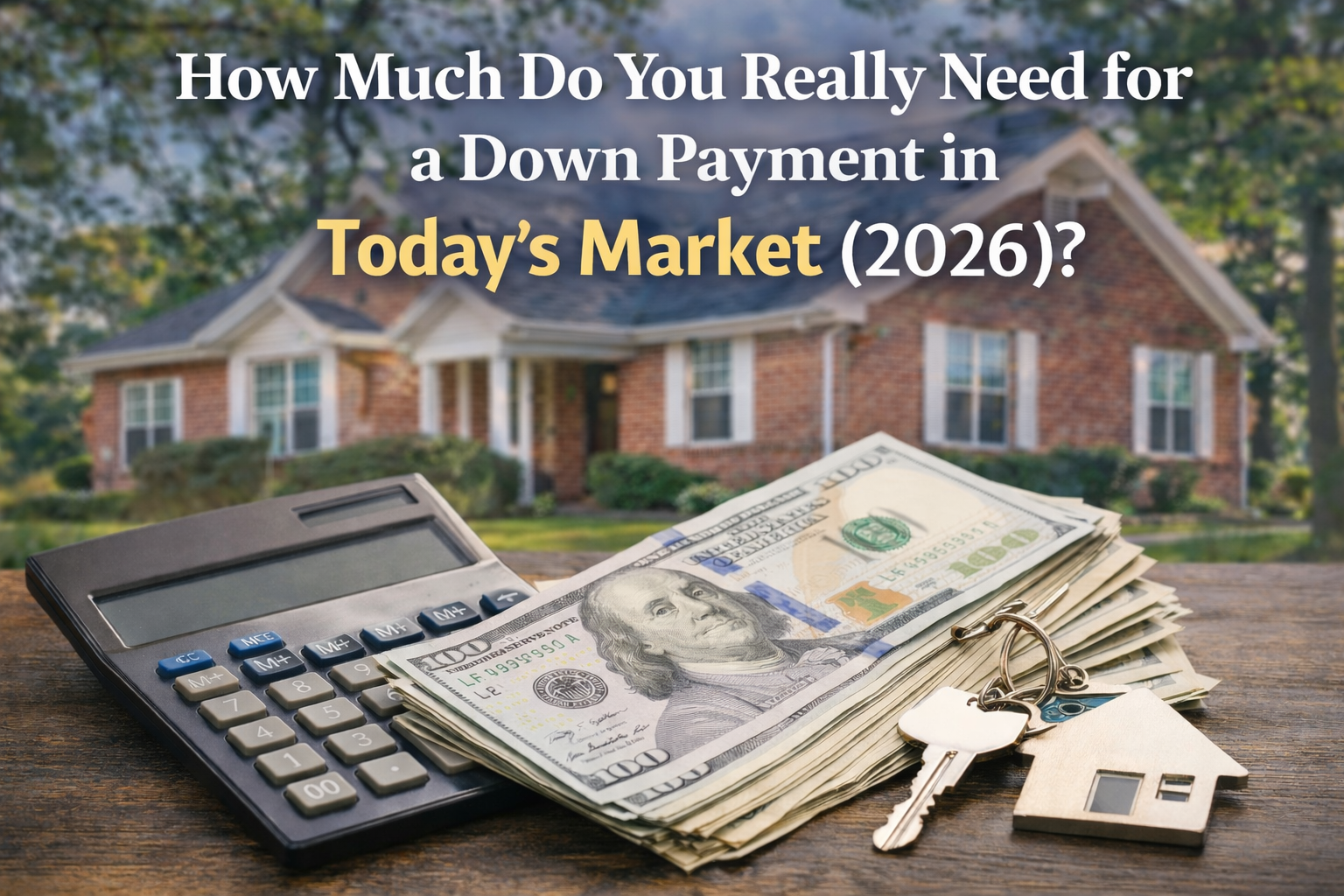
How Much Do You Really Need for a Down Payment in Today’s Market (2026)?

For years, the idea that you need a 20% down payment to buy a home has been passed around like gospel. But is that true information for 2026? Let us pull back the curtain on what buyers are putting down and what you might need, depending on your goals and where you live.
While 20% down is still the gold standard for avoiding private mortgage insurance (PMI), the reality is that most buyers, especially first-timers, are not putting down that much. According to recent data across United States, the average down payment in 2025 hovered around 7% for first-time buyers and 17% for repeat buyers. In many urban markets, it is even lower thanks to competitive lending programs and assistance options.
First-Time Buyers: Help Is Out There:
If you are a first-time buyer, you are not alone in feeling daunted by the numbers. The good news? There are more programs than ever designed to help you get a foot in the door. FHA loans, for example, can require as little as 3.5% down, while some conventional loans allow 3% down for qualified buyers. Many states and cities offer down payment assistance grants or forgivable loans, especially for those who meet income or occupation criteria.
In my experience collaborating with first-time buyers in the Midlands market, I have seen clients close on homes with less than $10,000 out of pocket, sometimes even less when factoring in local grants. The key is to start early, get pre-approved, and explore every available resource.
Move-Up Buyers: Leveraging Equity:
If you already own a home, your journey is different. Move-up buyers often use the equity they have built in their current home to cover a larger down payment on their next one. In 2026, with property values having risen steadily over the past few years, many homeowners find themselves with more equity than they realize. I have worked with families who sold their starter home and put 15% or even 20% down on their dream home, sometimes with money left over for renovations or an emergency fund.
Investors: Playing by Different Rules:
Investors face a separate set of requirements. Most lenders want to see at least 15-20% down for investment properties, though creative financing or portfolio loans can stretch those numbers. Growing suburbs competition can drive down payment expectations even higher. Studies have shown savvy investors partners with others or use 1031 exchanges to minimize cash outlay and maximize leverage.
Real-Life Scenarios
- Sarah, First-Time Buyer: Used a 3% down conventional loan and a city grant to buy her condominium with just $8,500 down.
- The Browns, Move-Up Buyers: Sold their townhouse, rolled the equity into a 15% down payment on a single-family home, and kept some cash for upgrades.
- Marcus, Investor: Partnered with a friend to split a 20% down payment on a duplex in a growing suburb, using rental income to cover the mortgage.
Final Thoughts: Find Your Number
The right down payment for you depends on your goals, your finances, and what is happening in your local market. The best move? Talk to a trusted real estate agent and lender early in your journey. With the right guidance, you might be surprised at how close you really are to owning your next home.
Not sure how much you really need to buy in Columbia? Get a personalized home affordability breakdown based on your income, loan options, and current market prices with no obligation required.
Categories
Recent Posts






"Molly's job is to find and attract mastery-based agents to the office, protect the culture, and make sure everyone is happy! "